
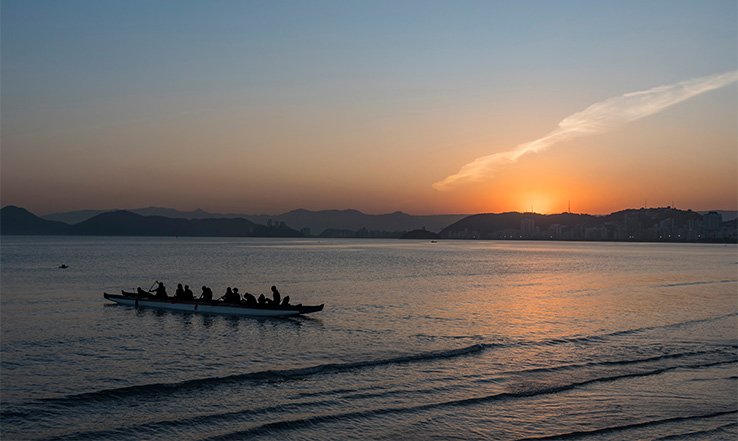
The ocean defines French Polynesia, shaping its traditions, cuisine, and the cadence of everyday life. To truly understand this far-flung constellation of islands is to experience its timeless bond with the water — a connection best navigated by yacht.
Stretching across more than 100 islands and atolls scattered over 1,200 miles of ocean, French Polynesia was first settled by navigators who crossed the Pacific Ocean using only the stars, wind, currents, and waves as their guides. Their seafaring traditions continue to shape Polynesian cultural heritage today, and the ocean remains a constant source of sustenance, connection, and identity.
The Legacy of Water
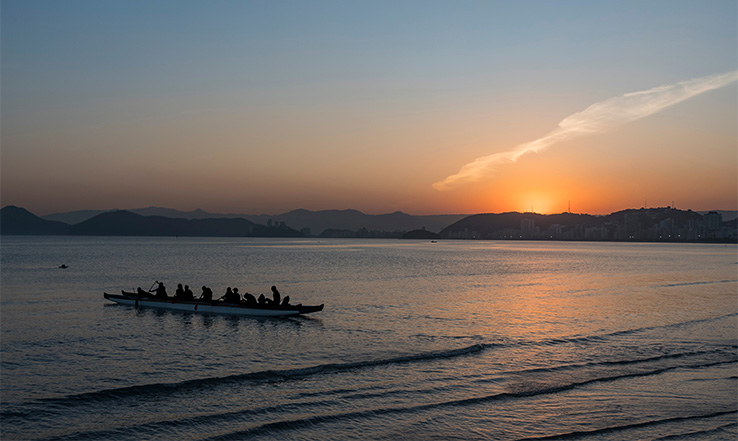
The scale of the Pacific is almost impossible to grasp. Within the Polynesian Triangle — bounded by New Zealand, Hawaii, and Easter Island — more than 2,000 miles can separate island groups. Yet early Polynesian voyagers crossed these immense distances to settle some of the world’s most remote islands, an incredible feat of human exploration and skill.
On a journey aboard Evrima, you can connect with this oceanic heritage, perhaps most notably in Raiatea, the spiritual heart of French Polynesia. During a guided visit to the UNESCO-listed Taputapuātea archaeological site, ancient stone maraes — sacred, open-air temples built from volcanic rock and coral stone — stand as enduring reminders of a civilization deeply shaped by its relationship to the sea. The ocean was a sacred force woven into daily life, and these maritime traditions of the South Pacific live on today through storytelling and stargazing experiences that reveal how these early voyagers charted their course across vast stretches of the Pacific.
Life Around the Tuamoto Archipelago Lagoons
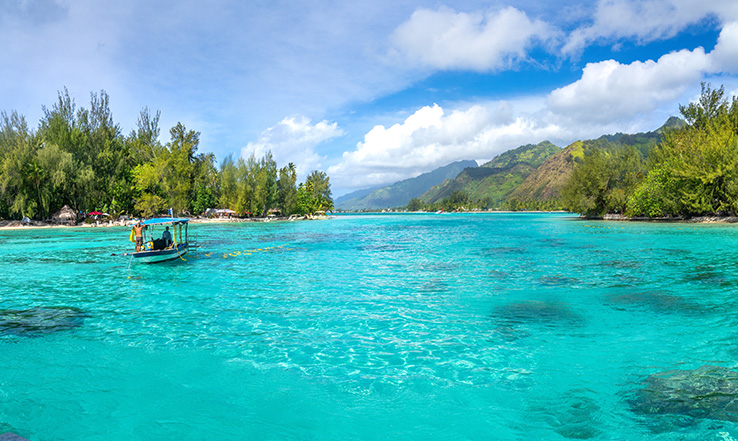
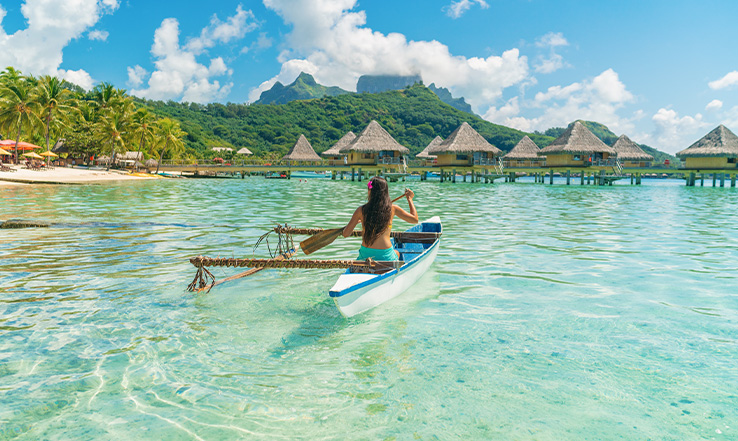
Even now, water continues to shape the rhythm of everyday life. In Bora Bora, Mo'orea, and throughout the Tuamotu Archipelago, life unfolds around protected lagoons that serve as gathering places, workplaces, and vital ecosystems. Fishing boats still glide across these protected waters, carrying on traditions that have sustained these island communities for generations, while overwater bungalows reflect a way of life intrinsically connected to the lagoon.
Beneath the surface, vibrant coral reefs support rich marine biodiversity and invite exploration, from snorkeling among tropical fish to kayaking along secluded coastlines and sailing beneath South Pacific sunsets. Still, beyond their beauty, the lagoons remain integral to Polynesian culture as a source of nourishment, community, and belonging.
Culinary Treasures From the Sea
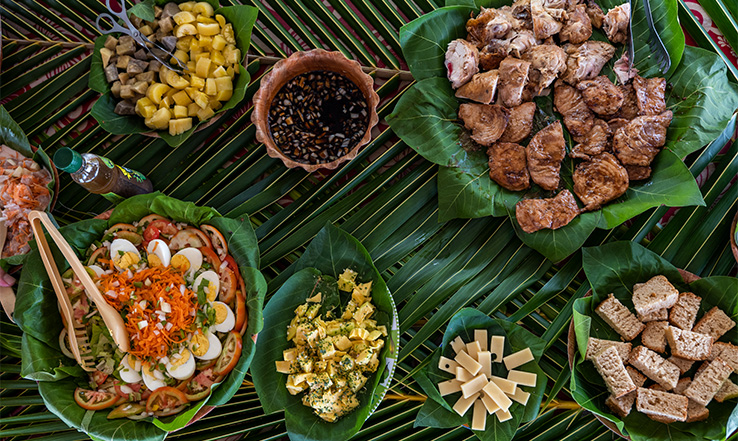
The ocean’s influence also extends to the table. Fresh tuna, mahi-mahi, octopus, and shellfish form the foundation of local cuisine, complemented by tropical fruits, coconut, taro, breadfruit and the fragrant vanilla grown across the islands.
Today, traditional culinary practices remain central to local culture. The ahimā'a, a Tahitian earth oven in which food is slowly cooked over heated stones, preserves techniques passed down through generations, while the national dish, poisson cru — fresh fish marinated in lime juice and coconut milk — showcases the enduring relationship between ocean and land.
Throughout the islands, local markets, cooking demonstrations, and seaside dining experiences reveal a cuisine that is both sophisticated and deeply rooted in place, offering a flavorful connection to French Polynesia's enduring maritime heritage.
An Ocean of Tradition
The sea's influence may be most profound in the islands’ culture and spirituality. For generations, the ocean has inspired mythology, dance, music, tattoo traditions, and sacred ceremonies. Stories of legendary voyaging ancestors endure, while traditional dances mimic the rhythm of the waves, winds, and marine life.
The ocean here is more than just a spectacular backdrop — it’s a living presence. In French Polynesia, the bond between people and the sea remains as strong today as it was centuries ago, continuing to shape the culture, traditions, and soul of the islands.