
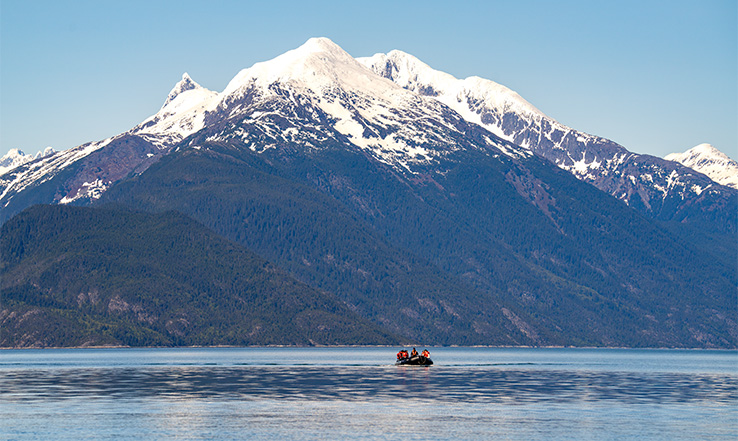
While larger vessels are confined to deep water, Luminara lingers in this restricted, whale-rich channel, where experiences feel immediate and unhurried.
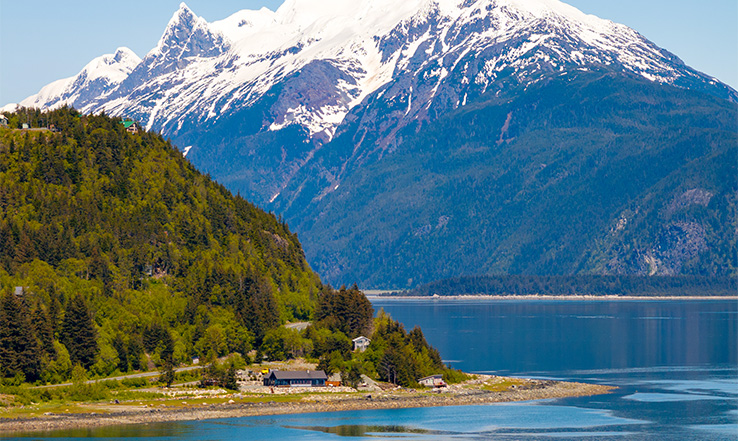
The Alaskan wilderness is not something you observe from a distance — it’s a world you enter. And nowhere is that feeling more profound than in Stephens Passage, a 105-mile-long stretch along the Alexander Archipelago, a restricted-access channel where spruce-lined shores and 5,000-foot peaks rise directly from the water. While larger ships remain confined to their well-worn routes, Luminara slips quietly into narrower passages and protected inlets, transforming the experience from distant viewing to full immersion.
A Haven for Small Ships
Navigating Stephens Passage is governed by strict environmental safeguards that limit large-vessel traffic. But for Luminara, those limits are an invitation. Captains quiet engines as a pod of humpbacks gathers nearby. The whales rise together, bubble-net feeding in a rare, synchronized display that looks almost choreographed. When the moment passes, the yacht glides onward into narrow inlets along a shoreline dotted by mountains while waterfalls spill from the Tongass National Forest into the glacial silt of the sea.
The Luxury of Stillness
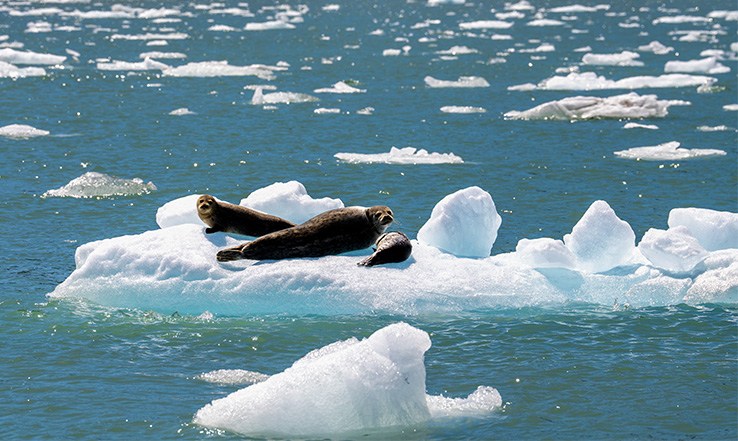
Aboard Luminara, unlike larger cruise ships, there is no urgency to “reach the port,” no rigid schedule of arrivals and departures. In Stephens Passage, that freedom becomes immersive, and you can linger long enough to notice the subtleties: the call of an eagle overhead, the steady cadence of whales surfacing, the distant crack of ice breaking from a nearby glacier. These are not fleeting impressions but unfolding moments — experiences that reward patience and attention.
Quiet Arrivals in Unhurried Ports, From Ketchikan’s Creek Street to Whittier’s Glacial Fjords
hat same philosophy extends to the land, where each shore excursion feels as tranquil as the landscape itself. In Ketchikan, an island community shaped by Native heritage and maritime tradition, the pace slows immediately. Explore Tongass National Forest by kayak, canoe, or Zodiac, or fish for salmon, halibut, and Dungeness crab. Take a seaplane over Misty Fjords or a helicopter to Mahoney Falls. On land, visit Creek Street, browse galleries or discover Tlingit totem poles and Alaska Native culture at Saxman Village and the Southeast Alaska Discovery Center.
Whittier, at the head of Prince William Sound, feels remote and cinematic, framed by the Chugach Mountains. Here, you can kayak through glacial fjords, spot otters and whales, or hike toward waterfalls cascading from icefields. Once a military outpost, the tiny town has a compelling story to tell. Visit the Prince William Sound Museum to explore Whittier’s past as a naval port and rail terminal and discover Alaska’s role during World War II and the Cold War.
At Icy Strait, culture and wilderness meet. Built by Alaska Natives on Chichagof Island, you can discover more of Tlingit culture in nearby Hoonah through traditional music and dance. Explore a restored cannery with shops and seafood, venture into the rainforest by ATV, zip above the canopy, kayak coastal waters, or watch for brown bears, whales, orcas, and sea lions.
The ports you’ll explore along Stephens Passage reward curiosity and patience. Here, the journey is measured not in distance, but in depth, and the greatest luxury is the freedom that Luminara gives you to pause, to watch and to wait.