When adventure beckons, heed the call and venture beyond the beach to discover three UNESCO World Heritage sites.
French Polynesia is an explorer’s paradise that invites you to look beyond the shore. Comprising more than 100 islands and atolls scattered across 1,200 miles in the South Pacific, it’s a dreamscape of towering volcanic peaks and cascading waterfalls, pristine coral reefs, aquamarine lagoons, and astonishing white- and black-sand beaches. But the allure of this archipelago extends far beyond its shores, with natural wonders and cultural sites that epitomize the spirit of these storied islands. Follow along as we explore the region’s extraordinary cultural and geological treasures.
Matira Beach, Bora Bora
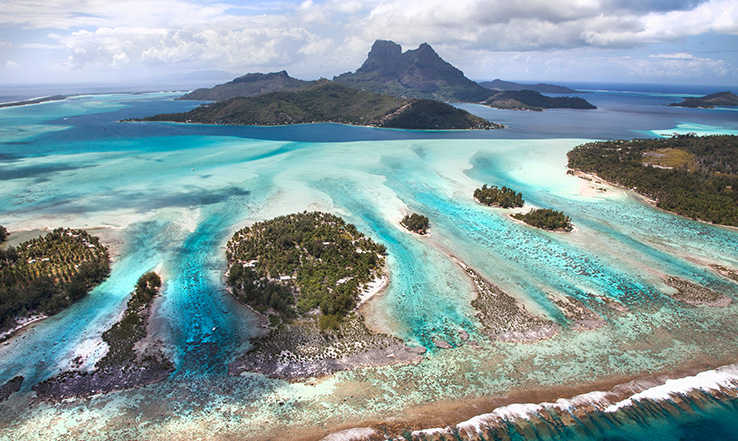
With a striking palette of vivid blues and lush greens, Bora Bora is a place of raw beauty and natural elegance. Its Matira Beach is often named one of the most beautiful in the world — and with good reason. A mile-long stretch of white sand and crystal-clear water, its moniker, “Jewel of the South Seas,” can’t be disputed. Same with its reputation as a haven for snorkeling straight off the beach, where you’ll find dazzling coral gardens and rays swimming along the shore. Nearby, the Matira Hills are a hikers’ and bikers’ dream, with stunning trails boasting views of the serene Bora Bora lagoon and Mount Otemanu, an extinct volcano that is the highest point on the island.
Onshore Excursions: Snorkel among stingrays and reef sharks, then step onto a private islet for a Tahitian oven feast — an authentic celebration of Polynesian tradition, flavor, and timeless island spirit. Or set sail across the lagoon, drifting into bliss at a floating bar in warm, waist-deep waters, cocktail in hand.
The Black Sands of Tahiti
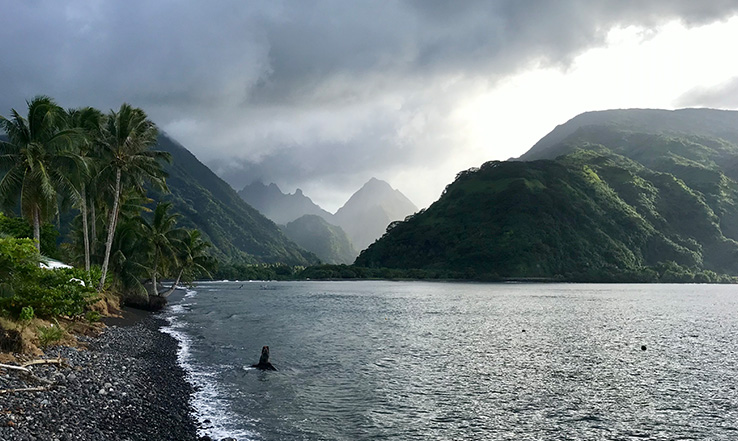
A dramatic complement to the white sand of Bora Bora, Tahiti mesmerizes with its stark, ebony-colored beaches born from volcanic activity. On the island’s northern tip, Plage de la Pointe Vénus is one of Tahiti’s most famous black-sand beaches, while its historic lighthouse, built in 1867, still aids in navigation, which is fitting for French Polynesia, the birthplace of ocean navigation. A nearby barrier reef attracts swimmers and snorkelers while luxuriating beachgoers can enjoy Tahiti’s unique, otherworldly atmosphere and superb views of mountains in the distance, the bay of Matavai and the island of Mo’orea.
A short drive from the beach, Papeete, the capital of French Polynesia, pulses with unique island rhythms. Stroll along the waterfront promenade and visit market stalls bursting with papayas and vanilla pods. Follow the scent of monoi oil and fresh baguettes while artists carve folklore into wood and musicians serenade passersby with their ukeleles under the shade of flame trees, also known as “flamboyant trees” for their bright orange-red blossoms.
Tiahura Beach, Mo'orea
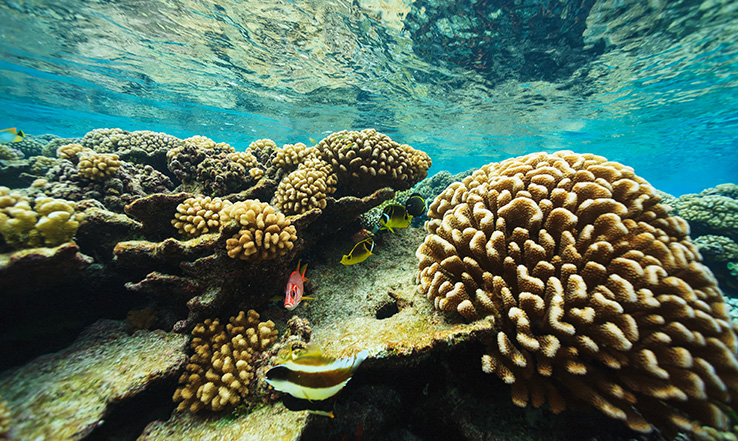
A quick ferry ride from its sister island, Tahiti, Mo’orea is a charming, heart-shaped isle known for a kaleidoscopic world beneath its waves. At Tiahura Beach, you can swim alongside the neon-colored reef fish that inhabit the shallow lagoon, a designated Ramsar Wetland, while sea turtles and eagle rays make snorkeling here among the best sites on the planet. Take some time away from the beach and visit a distillery, or stroll along the coast, lined with white churches toward bountiful fruit stalls at local farmers markets. Belvedere Lookout rewards climbers with sweeping views of Cook’s Bay and Opunohu Bay, the twin inlets named for the famed explorer, Captain Cook, who visited Mo’orea in 1777. The fusion of French, Chinese, and Polynesian cultures is especially evident in the island’s cuisine, where a chow mein sandwich is a must-try.
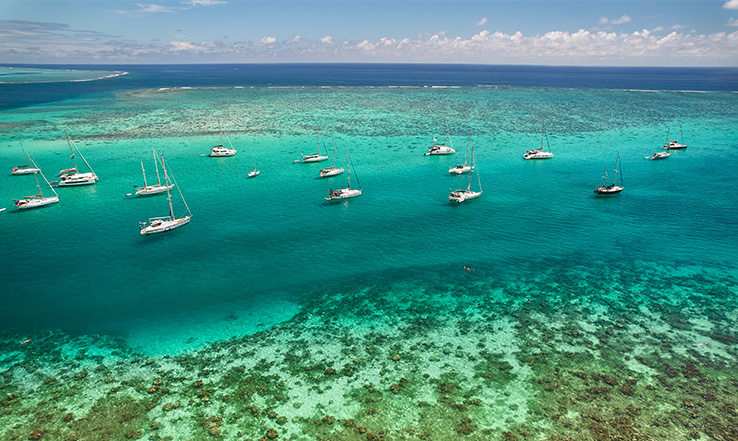
Beyond the Beaches: UNESCO Treasures
French Polynesia is home to three UNESCO World Heritage sites that showcase the island nation’s natural and cultural heritage.
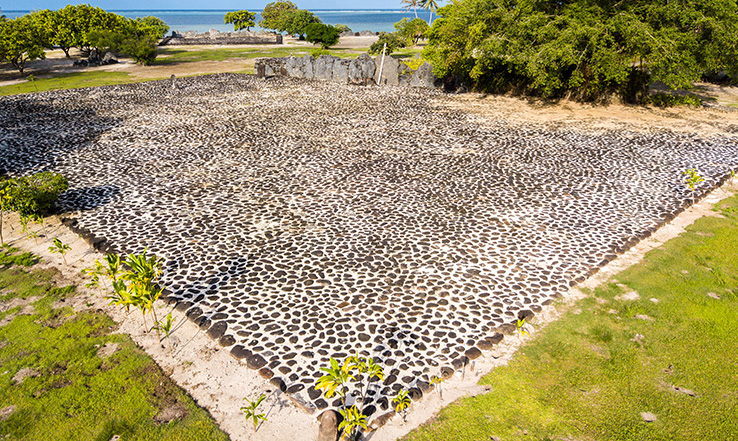
Taputapuātea, Raiatea
Raiatea, meaning “faraway heaven” in English, is the center of the Polynesian Triangle, an imaginary geographic and cultural area of the Pacific with its vertices at Hawaii, New Zealand, and Easter Island. It also was the last part of the world settled by humans. The temple of Taputapuātea, the most sacred archeological site in French Polynesia, was believed to be the birthplace of the gods. Today, this lush landscape is a paean to centuries-old, oceanic traditions that once linked communities across the Pacific.
Onshore Excursion: Aboard a catamaran, sail the turquoise seas around Raiatea, cruising past forested peaks and bays before anchoring in a calm lagoon.
The Marquesas Islands
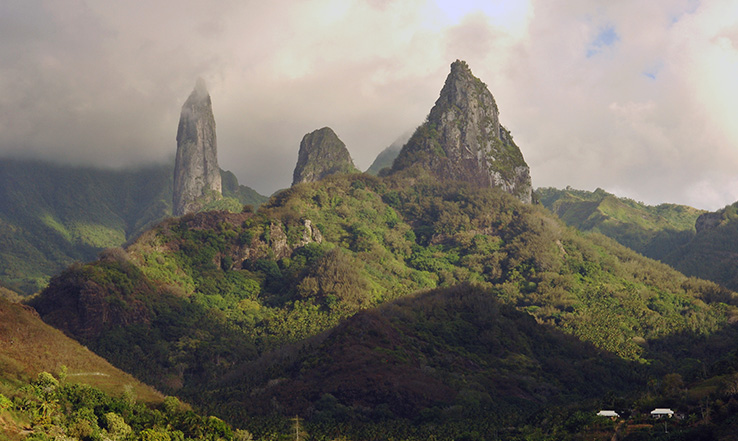
The Marquesas are among the most geographically isolated archipelagos in the world and a hotspot for biodiversity known for its protected flora and fauna and marine life. It’s also renowned for its steep mountains and towering cliffs. The pristine islands have been largely undisturbed by humans, and their waters are among the world's last marine wilderness areas.
Fakarava Biosphere Reserve
Honoring plants, water, animals, and the earth is an integral part of the ancestral culture of French Polynesia, and the Fakarava Biosphere Reserve in the Tuamotu Islands continues this tradition. Today, Fakarava is a marine sanctuary for more than 1,000 species of fish, rays, and sharks, and its coral reefs are among the best-preserved in the world. Since the reserve received its UNESCO designation in 1977, Fakarava has maintained the integrity of its ecosystem while allowing visitors access to its many natural wonders.